The ALEXA Mini is eleven years old. People point that out on the phone every so often, usually right before asking us to quote a camera that came out last year. But the real question isn’t how old the body is: it’s what has to come out of the edit. On that count, in 2026, the Mini still wins more often than you’d expect — and when it loses, it loses for very specific reasons. Here they are, from people who pull it out of the flight case every week.
What’s inside, briefly
A Super 35 ALEV III sensor, over 14 stops of latitude claimed by ARRI, ARRIRAW and ProRes recorded internally to CFast 2.0, up to 200 fps. Carbon body, sealed electronics, operating range from -20 to +45 °C. Three motorised FSND filters sit inside (0.6, 1.2, 2.1) and the mount is interchangeable: PL, LPL, EF, B4. The 4:3 and ARRIRAW modes are licences: ours are already active, but it’s a question worth asking anyone who rents you a Mini.
When we still pick it
Three very concrete cases.
- When drama has to look like drama. ARRI colour straight out of the camera is still the reference colourists work fastest with. On a short or a commercial with two days of post, that translates into hours saved.
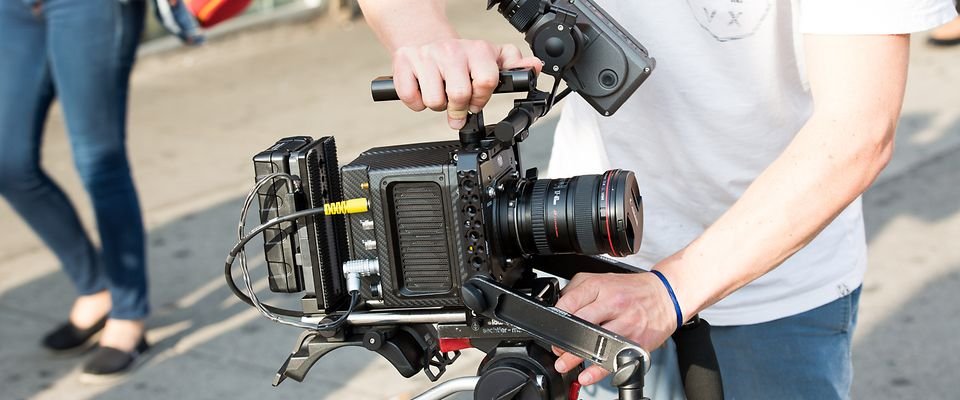
- When the camera has to go where a big body won’t fit. Roughly 2.3 kg for the bare body, symmetrical, mountable upside down: inside a car, on a light crane, under a drone, down an alley in an Abruzzo hill town two metres wide.
- When PL glass is already on the job. If the production has rented a cine set elsewhere, the Mini bolts on and doesn’t argue.
When we say no instead
We do say it, and we lose the booking. The Mini isn’t the right camera if you need native full frame — in that case we send out a Sony BURANO, which also has variable internal NDs and stabilisation, handy on documentary. It isn’t right if the client wants huge resolution for reframing in post or heavy VFX work: the URSA Cine 12K makes more sense there. And it isn’t right if the budget is a self-funded music video: a RED KOMODO 6K does the job and leaves money for lighting, which is usually the choice that saves the footage.
Why rent it rather than buy it
A used Mini body today, with accessories and glass, is still an investment you have to amortise over dozens of shooting days a year. In Abruzzo, between regional commercials, documentaries and shorts, most of the outfits we work with shoot two or three times a month. The maths almost never works out, and meanwhile the used cinema market keeps moving. Renting means paying for the day and pushing the risk onto us: cards, batteries, a lens that decides to seize up on a Friday night.
Two things we always say at pickup
- Offload the CFast 2.0 cards twice. Not once. The Mini records reliably, but the bottleneck is the set, not the camera: if there’s no DIT, a double backup is your insurance.
- Fit the MVF-1 viewfinder before you leave the warehouse. It sounds obvious, but the Mini can be run on the monitor alone, and people do head out without it. Outdoors in summer, at midday, you won’t see a thing on that monitor.
What we send out with it
On a gimbal we pair it with the DJI RS 3 Pro, which handles the lightly rigged body without running to the limit. For lighting, if you need a hard key through a window, out goes the Aputure LS 600x Pro. The rest is in our kit list, or write to us with what you have to shoot and we’ll tell you whether the Mini is the right call or whether we’re about to make you spend money for nothing.
Full official specifications for the body are on the ARRI ALEXA Mini product page. The sheet for our own unit, with configuration and accessories, is at ARRI ALEXA Mini rental.
A wide range of equipment in our catalogue, on-set delivery included across Abruzzo.