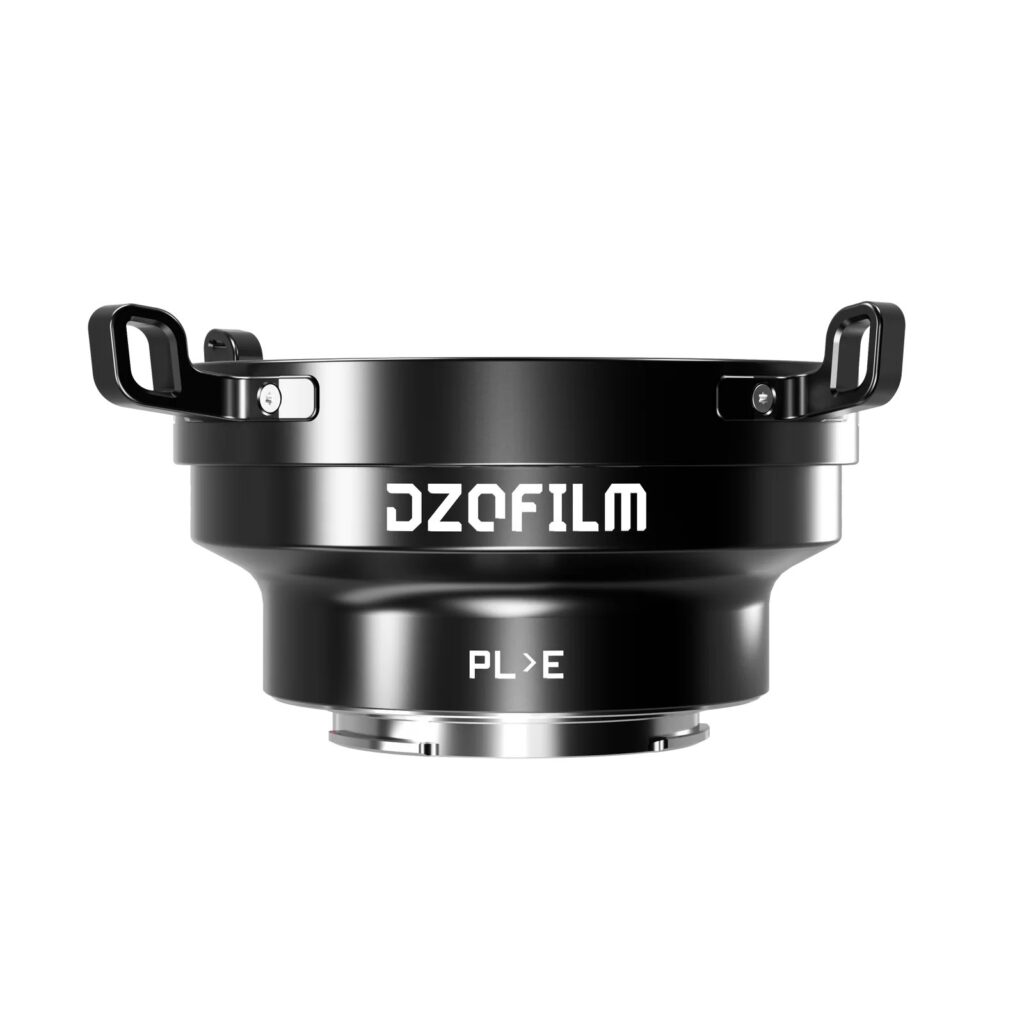
On June 17, 2026, DZOFilm opened pre-orders for the Octopus Adapter II, the second generation of its adapter for mounting PL cine lenses on mirrorless bodies. It comes in four versions: PL-E for Sony, PL-RF for Canon, PL-Z for Nikon and PL-L for Leica. List price is $199; full details are on the official DZOFilm product page, with coverage from Newsshooter. One detail already says plenty about demand: as of July 12, the official store listed it as sold out, waitlist included.
Half the weight of the first generation
The headline number is the weight: 178 to 190 grams depending on the mount, roughly 49% less than the 390 g of the original Octopus. The Sony E version comes in at 190.1 g, or 204.6 g with the support base attached. The body is aluminum alloy with a reinforced stainless steel mount, machining tolerance is rated at 0.01 mm, and the structure has been tested through more than 100,000 mounting and unmounting cycles while keeping the reliability of a native mount.
Two design choices matter more to us than the spec sheet. First, the detachable 1/4″-20 support base, which shifts the center of gravity onto the adapter and takes the stress off the camera mount — anyone who has hung a cine zoom off a compact body knows that is exactly where things go wrong. Second, the redesigned locking handle for faster lens changes: when a scene calls for three focal lengths, the seconds saved on every swap add up fast.
Coverage and compatibility
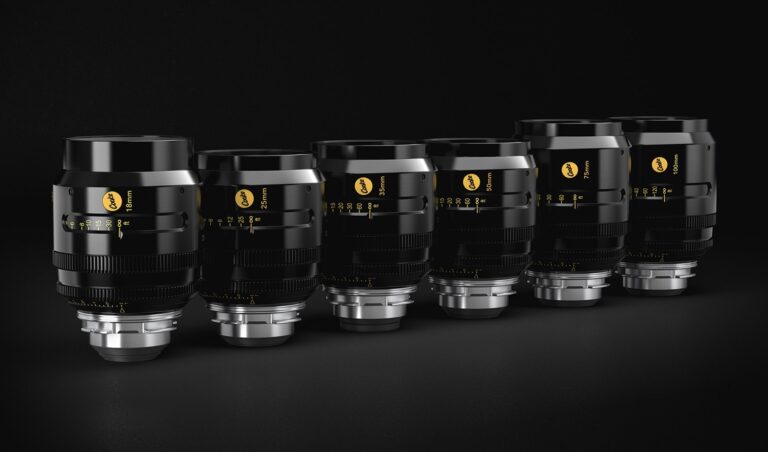
The Octopus II covers Super35, Full Frame and Medium Format sensors. Internal space has grown by 7.12% to make room for more cine lenses, including DZOFilm’s Arles, Arcana, Vespid, Catta, Pictor and Gnosis series.
What it means for productions in Italy and Abruzzo
In the field, a light, dependable PL adapter lowers the barrier to real cine glass for productions working with compact bodies. Here in Abruzzo we see it all the time: documentaries, commercials and short films shot with a Sony FX6 as the A-cam and a Sony FX3 on a gimbal or in a car mount. With the PL-E version, the same set of PL glass moves from one body to the other without changing how you work — and 190 grams instead of the nearly 400 of the first generation makes a real difference when you are balancing a stabilizer or rigging the camera on an arm.
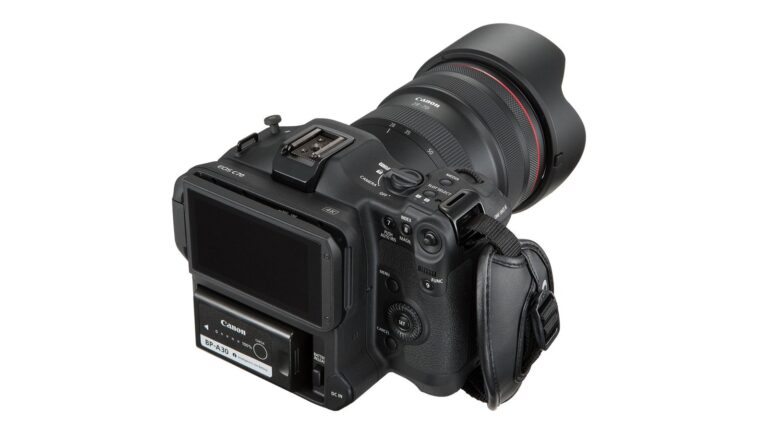
The same logic holds on the Canon side: the PL-RF version opens PL lenses up to the Canon EOS C70, a body we run into more and more often on documentary and corporate jobs.
Buy it, or rent it with the rest of the package?
At $199 the temptation to buy is understandable, but the sold-out status with a waitlist tells the real story: if your production starts in two weeks, waiting is not an option. And there are questions more practical than price:
- Pre-shoot checks: the 0.01 mm tolerance is a factory spec; on set, what counts is that camera, adapter and lens have been tested together before leaving the warehouse.
- Package consistency: renting body, adapter and glass as a single kit removes compatibility surprises on shoot day.
- Frequency of use: if you need PL lenses three times a year, renting the complete package still makes more sense than buying an accessory that sits in a drawer.
We are keeping an eye on the Octopus II for our rental fleet: an adapter tested for 100,000 cycles is exactly the kind of tool that earns its keep week after week in a rental house. In the meantime, our equipment catalog has Sony E and Canon RF bodies ready to go out — for any camera-and-lens combination, just ask us for a quote.
A wide range of equipment in our catalogue, on-set delivery included across Abruzzo.