Miller Camera Support Equipment is closing. The news broke on 25 August through an open letter from owners Mark and Diane Clementson, titled “Celebrating 72 Years of Innovation and Service” and sent to distributors: the last day of trading is 25 September 2026, with operations ceasing on 30 September. The Guild of Television Camera Professionals published it under a headline that says it all, “Miller Camera Support Equipment 1954-2026”.
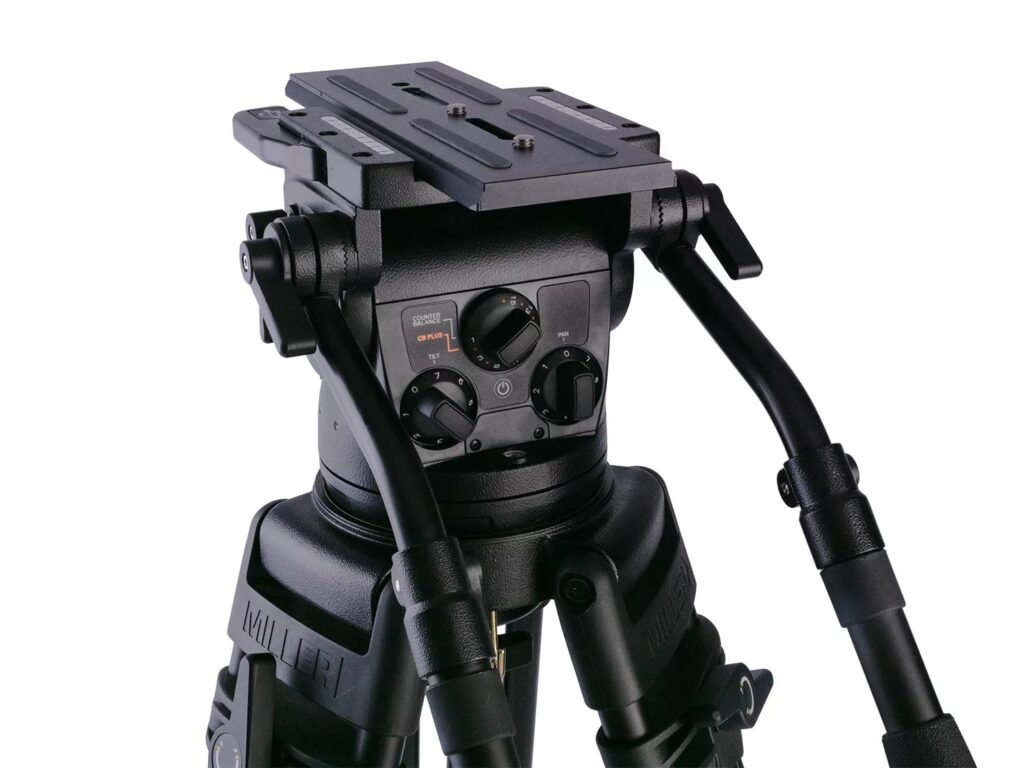
If you have never had your hands on a Miller: this is the Australian company born out of the work of Bob Miller, who patented the world’s first fluid tripod head in Sydney in 1946. Everything we now take for granted about a video head, the oil damping that lets you land a pan without a jerk, starts there. The Clementson family ran the business for 55 years, looked for a buyer, could not find one, and decided to retire and shut it down. The letter says they will “support customers and fulfil existing commitments” during the transition. There is no detail, though, on spare parts and servicing after September.
Why this matters to a rental house
A fluid head is not a camera body. You swap a body every three or four years, you keep a head for fifteen or twenty. In a rental inventory, support gear is the oldest and most profitable part precisely because it does not age. According to the figures quoted by the company there are more than 200,000 Miller systems in use worldwide across news, documentary, cinema and television: that is hardware that will keep working for a good decade after the doors close.
The head breaking is not the problem, because it does not break. The problem is seals, quick-release plates, knobs, tripod feet, pedestal columns: the consumables. As long as distributors have stock on the shelf you carry on; after that, either you find a workshop that can machine the part or that head becomes a very elegant paperweight.
What to do about it
- If you own Miller gear: call your dealer or your local distributor now, not in October. Ask in writing where things stand on spares, servicing and any open warranty claims. The letter talks about honouring existing commitments, so get yours on paper while there is still someone answering the phone.
- If you are about to buy: over the next few weeks you will see new Miller units discounted hard. Think it through, because a bargain on a product with no support behind it is only half a bargain. If anything, ask for a spares kit along with the head.
- If you buy used: from October the second-hand price of a Miller has to reflect the absence of the manufacturer. Do not pay July money for it.
The context deserves saying out loud. The camera support sector has been under pressure for years, squeezed between loss-making Western groups and Chinese manufacturers building honest heads at a third of the price. Miller did not fall because of a bad product, the CiNX 8 is still a serious head, but because at some point a family business with no succession and no buyer simply stops. The detail that struck us most: they were at Cine Gear 2026 a few weeks ago and ran a US warehouse sale in late June. No warning at all, as CineD also points out.
Support gear is the last place to cut corners
On set, support is the one item you cannot improvise. If the head stutters, the pan looks dirty in the edit and no stabiliser in post will save it. That is also why, in our opinion, it makes sense to rent it rather than buy it: the risk of a manufacturer folding, of a seal you cannot source or of a service interval missed stays with whoever keeps the inventory running for a living, not with the person who has to deliver a job on Friday.
With us, heads and tripods arrive already balanced for the body you booked, whether that is a Sony BURANO with cine glass and a mattebox or an ARRI ALEXA Mini in a shoulder build, with the DJI RS 3 Pro as the handheld alternative. The rest of the inventory is on the equipment page, and if you want something ready to go there are the kits.
A wide range of equipment in our catalogue, on-set delivery included across Abruzzo.