Tamron has confirmed receiving a non-binding proposal from Sony to be absorbed entirely into the group. This isn’t forum chatter: it’s an official company notice, published as an investor communication after the story broke in the Japanese press. Sony already holds just over 15% of Tamron as its second-largest shareholder, and the company’s market value sits around 200 billion yen, roughly 1.2 billion dollars.
Tamron’s wording is careful: yes, the proposal exists, yes, a special committee has been set up to weigh the options, but “there are no matters requiring disclosure at this stage”. Translation: nobody has signed anything, and nobody has said no.
Why anyone shooting should care
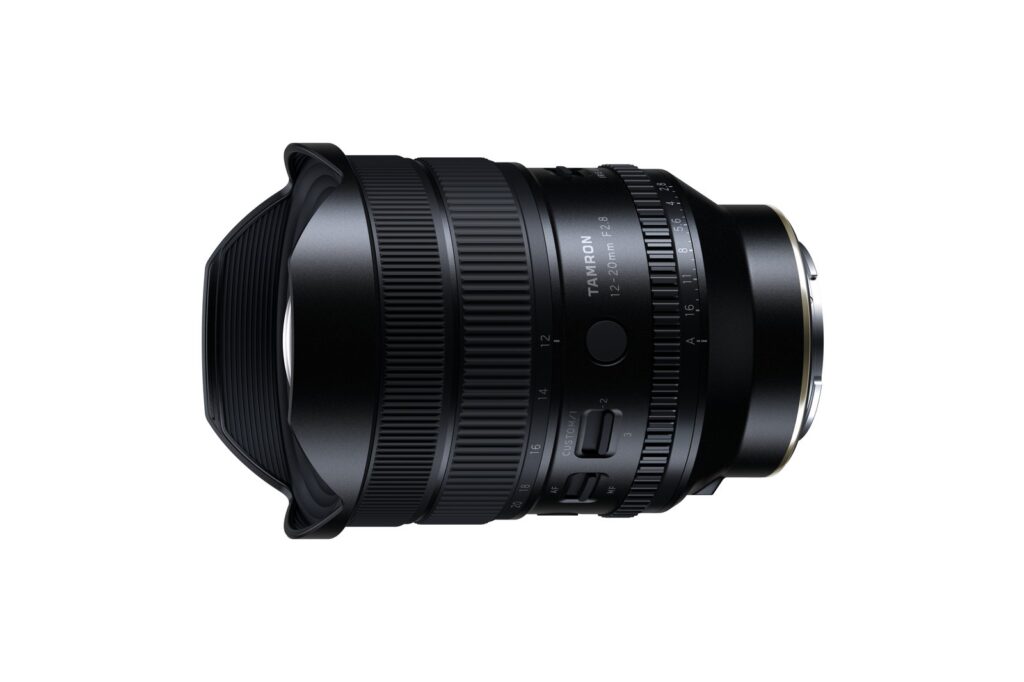
Because Tamron isn’t a niche badge. It builds glass for Sony E, Nikon Z, Canon RF APS-C and Fujifilm X, and for years it’s been one of the few third-party makers with genuine industrial volume and quality. If it ends up wholly inside Sony, everyone asks the same obvious question: how long will Tamron lenses keep coming out for competitors’ mounts?
Our take is to keep it cool. A deal like this, if it closes at all, closes over months rather than weeks, and it goes through competition authorities whose job is precisely to look at that kind of effect. Nothing changes right now: the catalogue stays, service stays, firmware keeps shipping — the latest one, pushing the 25-200mm G2 to a 1:1.7 magnification ratio, landed two days ago. The question is the medium term, and that’s where anyone about to buy should pause.
The part that touches Italian productions
On set this news doesn’t move a single frame. What it does move is how you should think when you put a lens package together. In Italy the third-party market is what’s kept half the independent sector standing: decent lens sets at a third of the price of true cine glass, letting a short film or a regional commercial hold a coherent image without blowing the budget.
If the sector consolidates — and Sony buying Tamron is serious consolidation — the first variable to move is list price, not quality. It’s the same reason we keep repeating ourselves: buying a kit for two or three shoots a year is a bet on residual value, and bets on residual value tend to lose when the market reorganises. Renting moves that risk onto us, and we amortise the gear across dozens of shooting days.
What we’re doing in the meantime
- No change of course on bodies: if you work in E-mount you keep working, and our Sony FX6 and Sony FX3 remain the most requested pair for docs and commercials.
- On productions where look matters more than flexibility, stock glass was always the wrong answer: you go with a dedicated cine set, paired with bodies like the Sony BURANO or the ARRI ALEXA Mini.
- If you were planning a serious third-party lens purchase before year end: waiting a few weeks to see how this settles costs you nothing. In the meantime you rent the gear, which is rather the point.
Our position, plainly: it’s big news for the industry and irrelevant to your next set. Anyone telling you Tamron lenses vanish tomorrow is selling clicks. Anyone telling you nothing will ever change is ignoring how acquisitions work. The work happens in between, and the work gets done with what’s available today.
The full statement is on Tamron’s official site; the most complete English write-up came from Newsshooter. Otherwise, our equipment catalogue is right where it’s always been.
A wide range of equipment in our catalogue, on-set delivery included across Abruzzo.