GoPro finally put a date on the MISSION 1 PRO ILS, its first interchangeable-lens camera: September. CEO Nicholas Woodman confirmed it on the fiscal Q2 2026 earnings call, and announced a new monitoring app for iPhone and iPad alongside it. Pricing was already known from the spring launch: $699.99, or $599.99 for existing GoPro subscribers.
What it actually is
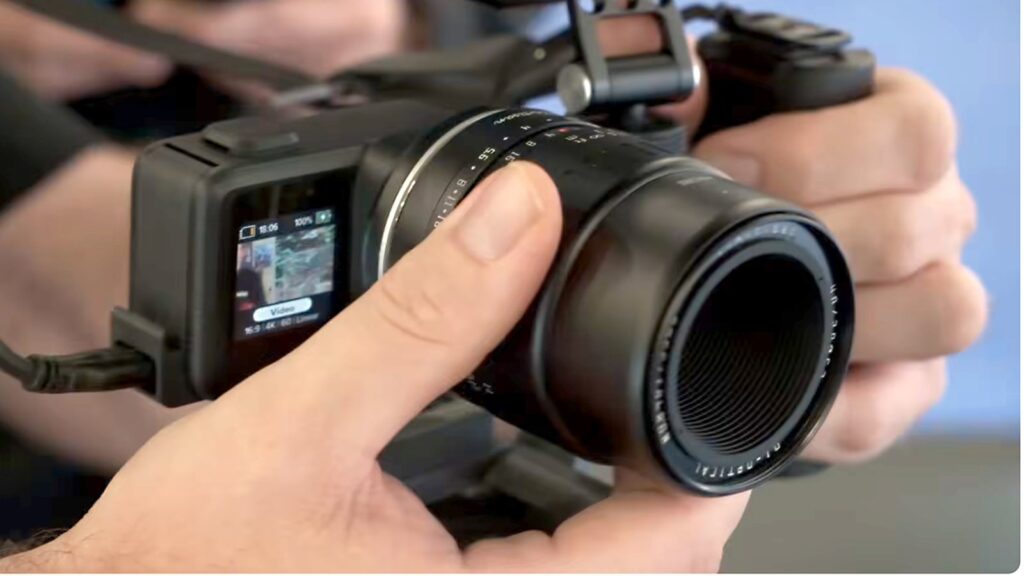
Same 1-inch 50-megapixel sensor as the MISSION 1 PRO, same GP3 processor, same capture modes up to 8K, but without a fixed lens: in its place sits a Micro Four Thirds mount. The body stays tiny and is rated weatherproof, not waterproof. On set that matters more than it sounds: in the rain you cover it like any other camera, which is not what GoPro has trained us to expect.
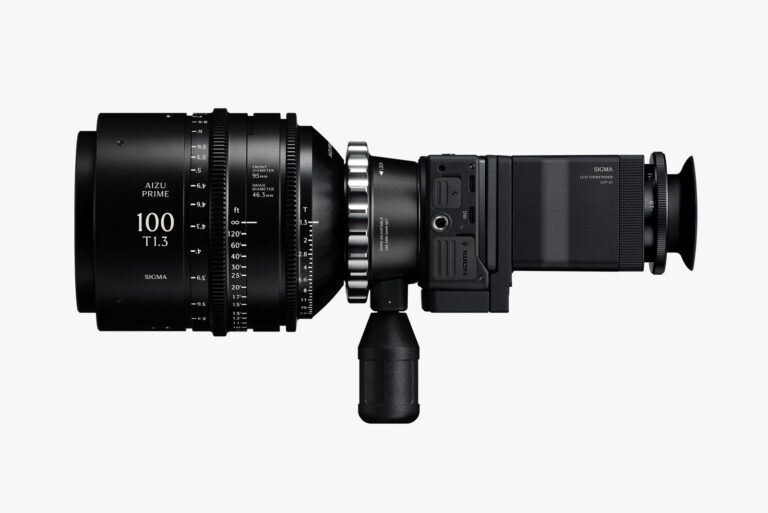
The thing to understand before getting excited is the mount itself. It has no electrical contacts at all. GoPro chose that to avoid grounding issues and to allow safe lens swaps in the field, but the consequence is blunt: no autofocus, no body-controlled aperture, no dialogue with optical stabilisation. Only manual-focus, manual-aperture lenses will work. There are plenty of those in the Micro Four Thirds world, and with more than a hundred adapters available, vintage glass and PL primes come into play too.
Crop is the real variable
A 1-inch sensor behind an MFT mount means the image circle is more than enough: any MFT lens covers it comfortably. The flip side is the crop factor, roughly 2.7x against full frame, rising to about 3x once in-camera stabilisation is on. In practice: a 17mm MFT lens frames like a 50mm. You get the long end for free; the wide end has to be planned around 6-12mm pancakes, which on a body that size are the natural pairing anyway.
The Mission Monitor app
Woodman described Mission Monitor as a live preview on iPhone and iPad with professional monitoring tools: composition overlays and remote control to frame, expose and start recording. It lands on the App Store in September alongside the camera. With a body that has no real monitor and manual-only lenses, the app isn’t an accessory: it’s how you pull focus.
Why we’re in no hurry
On the same call GoPro reported revenue down 31% to $105 million, units down 38% to 291,000, a GAAP loss of $51 million and cash down to $27 million, with the sale of the company described as being in its later stages. That isn’t a number to leave to analysts: anyone buying gear, and especially anyone renting it out, has a direct interest in knowing who will maintain the firmware and who will answer the phone for service in two years.
In our view the ILS does have a place on a production, and it’s the place of the expendable camera: POV, crash cam, a locked-off angle where you’d never put the A-camera, shots from a moving vehicle, action work on the gravel and snow of the Apennines. At seven hundred dollars with a pancake on the front, it’s a body you can afford to risk. It is not, and doesn’t try to be, a B-camera that cuts cleanly next to a RED KOMODO 6K or a Sony FX3: sensor, dynamic range and colour workflow are in a different league.
The practical advice, if your project has a single shooting day with that kind of shot: renting a compact body you already know plus a DJI RS 3 Pro costs less than betting on a camera that hasn’t shipped yet. We’ll test it properly in September and, if it holds up, we’ll decide whether it earns a slot in our kits. Until then, the verdict stays open.
Official source: GoPro MISSION 1. Verification and quarterly details: RedShark News.
A wide range of equipment in our catalogue, on-set delivery included across Abruzzo.