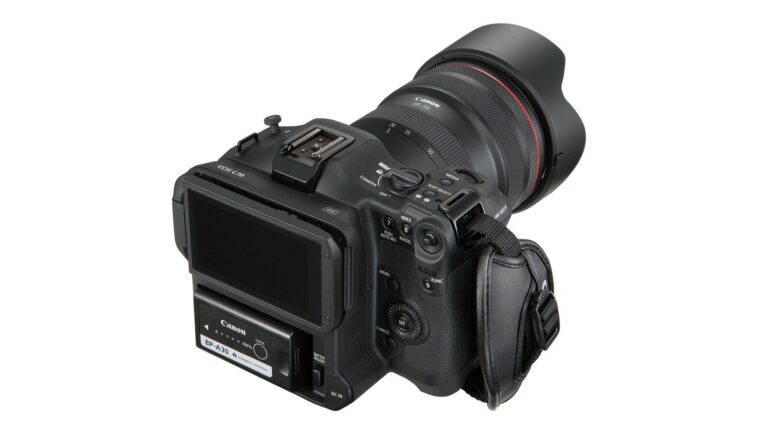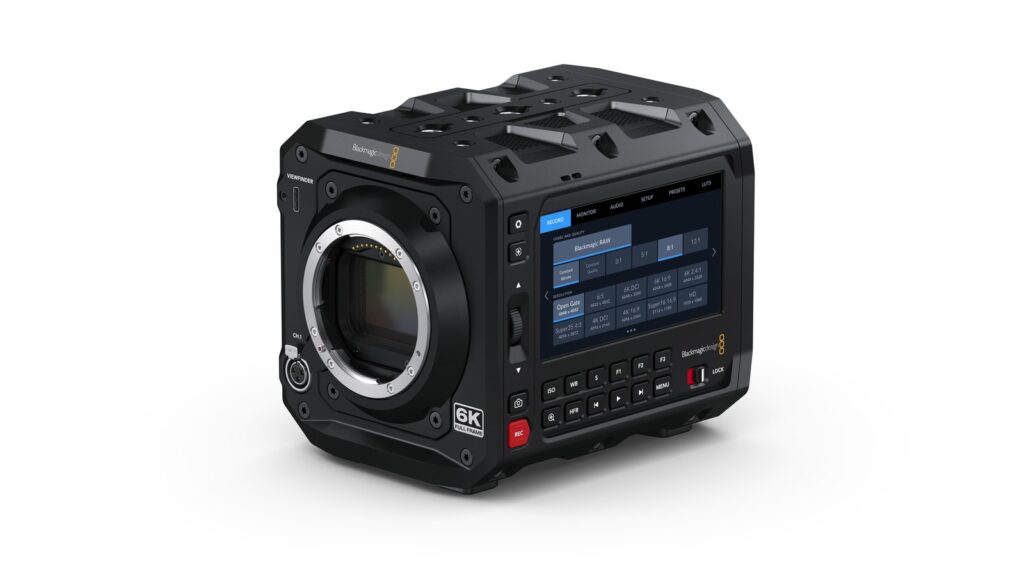
Blackmagic Design has cut the price of its full frame 6K cameras. The announcement came today, 4 September, and it is not a small adjustment: the Cinema Camera 6K drops by more than a thousand dollars. The official reason, in Grant Petty’s words, is that the company secured better pricing on some parts and chose to pass it on rather than keep the margin. In a year when almost every manufacturer has pushed prices up, that stands out.
The new prices
- Blackmagic Cinema Camera 6K: from $2,715 to $1,595
- PYXIS 6K L: from $3,080 to $1,995
- PYXIS 6K EF: from $3,070 to $1,995
- PYXIS 6K PL: from $3,265 to $2,195
Those figures exclude local duties and taxes. On Blackmagic’s own site, where listed prices include duties, the same bodies show up at $1,755, $2,245 and $2,475. Translated for us in Italy: add VAT and the dealer’s margin and the street price will be noticeably higher than the number in the press release. Get a real quote before you get excited about the American figure. The cameras are shipping now from resellers and will be on Blackmagic’s stand 7.C49 at IBC 2026.
What you actually get
The sensor is the same across the range: full frame 36 x 24mm, 6048 x 4032 native resolution, dual native ISO up to 25,600 and a claimed 13 stops of dynamic range. You can record up to 36 fps in 3:2 open gate at full sensor area, 60 fps in 2.4:1 (6048 x 2520) and 60 fps in 4K DCI; window the sensor and you get 100 fps in Super 16 and 120 fps in 1080. There is also true 6:5 anamorphic at 4.8K with no crop, which is the whole reason you buy a full frame body instead of a Super 35 one.
The difference between the two cameras is not the sensor but the body: the Cinema Camera 6K is L-mount only and shaped like a mirrorless, while the PYXIS is a box with mounting points everywhere, available in EF and PL as well. Anyone working with rental cine glass will look at the PL version and stop there.
What it changes on set
In our view the story is not “it costs less”, it is “the bar for a second camera has moved”. Until yesterday, fielding a full frame RAW B-cam that could actually match the A-cam meant three or four thousand euros of body, and nobody does that for a two-day commercial. At $1,595 the Cinema Camera 6K becomes the body you buy to keep in the bag: crash cam, locked-off second angle, the camera you leave built on a gimbal all day without stripping the main one.
Watch out for one piece of arithmetic that always holds on the field, though: the body is not the expense. A PYXIS 6K ready to shoot needs a monitor or EVF, a cage, fast CFexpress cards, batteries and a plate. The real cost of getting it on the road is comfortably double the body price. People who write to us saying “I found one at $1,995, should I buy it?” usually have one shoot a year in mind: in that case renting is still the economical choice, full stop.
The logic flips if you use the camera every week. Then it pays for itself quickly and owning it makes sense, while you keep renting whatever you need intermittently: the glass, the wireless, the big lights. That is the model we have recommended to production companies in Abruzzo for years, and with these prices it works even better.
The cut does not touch the high end: the Blackmagic URSA Cine 12K stays where it was, and so do the other flagships. If the job calls for 12K, real latitude and a body designed around a crew, that is still the route; if you need a second or third angle that matches in colour, the new 6K bodies are the obvious answer. On our sets we happily pair them with a RED KOMODO 6K or a Sony FX6 when the rig has to stay light and fast.
Sources: official Blackmagic Design press release and Newsshooter.
A wide range of equipment in our catalogue, on-set delivery included across Abruzzo.