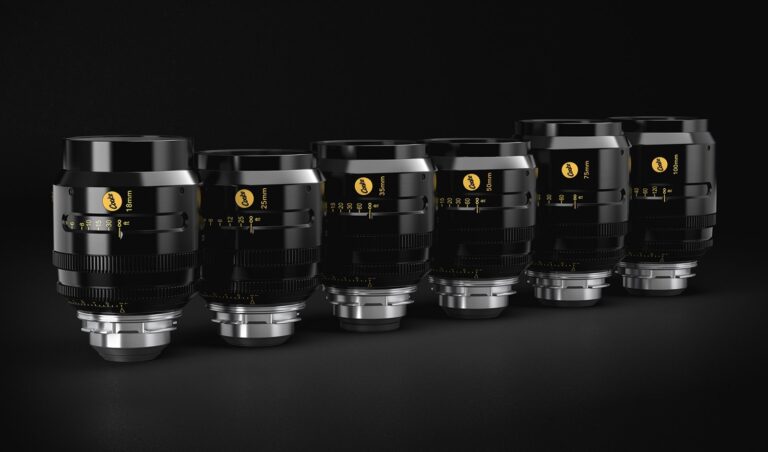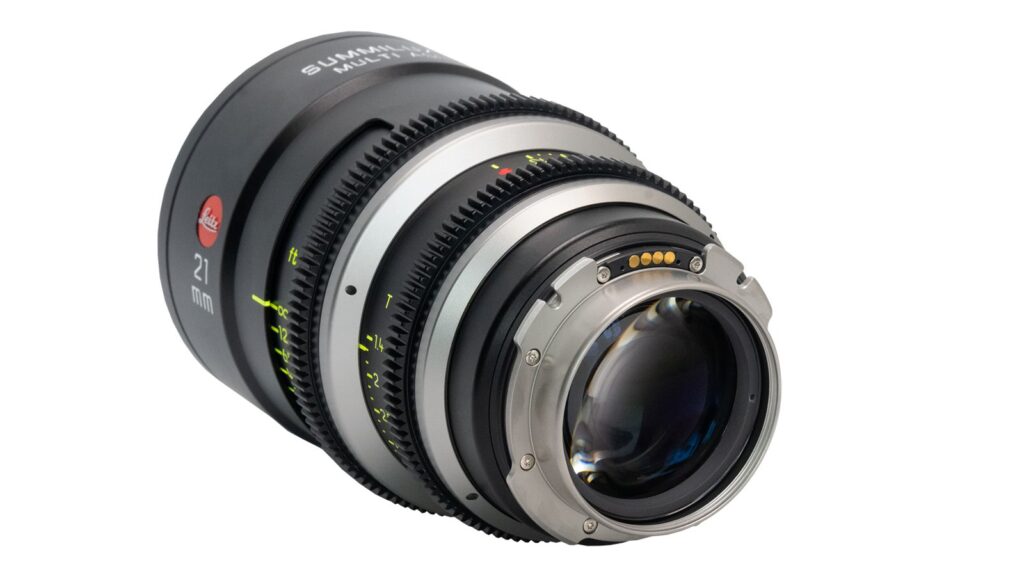
Leitz Cine has introduced the iD Mount, a replacement mount for the HUGO and SUMMILUX-C series that adds a metadata interface to lenses that never had one. There are no new electronics inside the barrel: you swap the mount, check back focus, and the lens starts telling the camera what it is. It costs €500 per mount, plus €320 for the programming base. CineD covered the announcement on 22 September.
What it records, and what it doesn’t
The key thing to understand is that this is static /i metadata. What ends up in the file:
- lens name and focal length;
- serial number;
- distortion map;
- shading map (vignetting).
What you don’t get is frame-by-frame data: focus distance and T-stop are not read, unlike a full Cooke /i lens. If your VFX supervisor needs per-frame focus for a green screen tracking shot, the iD Mount won’t cover it. If they need to know for certain which lens was on every take and how it distorts, it will.
Which lenses
- HUGO (full frame): a single LPL iD Mount design covers every focal length in the range.
- SUMMILUX-C (Super 35): PL mount, with different versions depending on focal length. The 135mm is not supported.
You can order new lenses with the iD Mount fitted or upgrade the ones you already own. The iD Mount Update Base comes in PL and LPL versions and, with free software for macOS and Windows, loads each lens’s own distortion and shading maps into the mount. No account, no subscription, no internet connection. Leitz also offers factory programming with the serial number for an extra fee.
One detail we like: if the interface stops working, the lens is still a lens. You go back to working the way you always have, by hand, without holding up the set.
Why it matters to a rental house
On set, shooting with a SUMMILUX-C was never the problem. Working out afterwards what was on the camera was. The second AC’s sheet gets wet, someone writes “35” when it was the 40, and an editor loses half a day. With the name and serial inside the clip, the camera report checks itself.
The second benefit is for anyone doing compositing: undistorting plates, matching lenses across cameras, putting the original distortion back after the CG goes in. The map arrives with the footage. Leitz is upfront about one thing, though: each camera displays this data in its own way, and the whole pipeline, from DIT to delivery, has to preserve it. Run a full test through your own workflow before you rely on it.
In our view, €500 per lens makes sense if you own a HUGO or SUMMILUX-C set and put it to work on commercials and VFX-heavy series. If you are renting for a single project, the right question for your rental house is a different one: “do your lenses pass metadata to the camera I’ve picked?”. It’s the same question you already ask us when we fit a PL set to an ARRI ALEXA Mini, a Sony BURANO with a PL adapter or a URSA Cine 12K.
Our advice
If you are prepping a post-heavy job in Abruzzo, tell us early which lenses and camera you have in mind: we’ll check at the camera test what actually lands in the files, before the compositor finds out. The rest of our inventory is on the equipment page. Full official details are on Leitz Cine’s iD Mount page.
A wide range of equipment in our catalogue, on-set delivery included across Abruzzo.